$25.00
Sweetfern
Comptonia peregrina
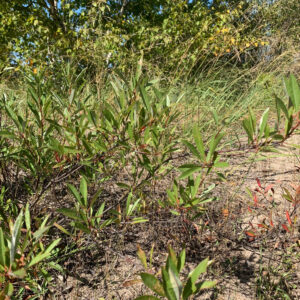
Sweetfern is a hardy, aromatic native shrub of sandy barrens, dry woodlands, and open slopes across Ontario and eastern North America. Despite its name, it isn’t a fern at all—but a member of the bayberry family—with deeply cut, fern-like leaves that release a rich, resinous scent when brushed. Tough, adaptable, and quietly powerful, Sweetfern is a cornerstone species for restoration, resilience, and low-input landscapes.
Description
Sweetfern is a low-growing, spreading shrub typically reaching 0.6–1.2 m in height, forming dense colonies through underground rhizomes. Its narrow, lobed leaves turn golden-bronze in fall and persist late into the season. Plants are dioecious (male and female on separate plants), producing small nutlets on female plants. Once established, Sweetfern is exceptionally drought-tolerant and thrives where many other species struggle.
Growth Conditions
Light: Full sun to partial shade
Soil: Dry to medium moisture; sandy, gravelly, or rocky soils
pH: Acidic preferred
Moisture: Dry to drought-tolerant once established
Hardiness: Zone 2–6
Maintenance: Very low; no fertilizer required
Sweetfern is a nitrogen-fixing shrub, improving poor soils over time through symbiotic soil bacteria—making it an ecological pioneer species.
Ecological Value
Sweetfern punches far above its weight ecologically:
Larval host plant for several moth species, including:
Gray Pug (Eupithecia misturata)
Sweetfern Geometer (Cyclophora pendulinaria)
Sweetfern Underwing (Catocala antinympha)
Brown-tipped Twig Moth (Anacampsis niveopulvella)
Bouns Round!
Provides cover for ground-nesting birds and small wildlife
Stabilizes sandy and erosion-prone soils
Enhances soil fertility through nitrogen fixation
Aromatic foliage is deer-resistant and unpalatable to most browsers
Ethnobotanical & Practical Uses
Historically used by Indigenous peoples for medicinal teas, salves, and as an insect repellent. The leaves have been used for bedding, sachets, and traditional remedies. Today, it shines in naturalized landscapes, restoration plantings, pollinator gardens, and dry, challenging sites.
Pairs Well With
Bearberry (Arctostaphylos uva-ursi)
Little Bluestem (Schizachyrium scoparium)
New Jersey Tea (Ceanothus americanus)
Prairie Smoke (Geum triflorum)
Gray Goldenrod (Solidago nemoralis)
Together, these species create resilient, low-maintenance plant communities for sandy or nutrient-poor soils.