$15.00 Original price was: $15.00.$10.50Current price is: $10.50.
Diervilla lonicera
Common Name: Bush Honeysuckle
Description
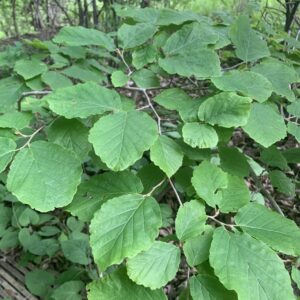
Diervilla lonicera is a tough, low-growing native shrub valued for its resilience, adaptability, and high ecological function. Native to much of eastern and central North America, this species thrives in challenging conditions where other shrubs struggle, including dry soils, partial shade, and disturbed sites. Its bright yellow tubular flowers bloom in early to mid-summer, providing reliable nectar resources when many woodland shrubs are not in flower.
Bush Honeysuckle forms a dense, spreading shrub that stabilizes soil, suppresses weeds, and supports native biodiversity. Its foliage often develops attractive red and burgundy tones in fall, adding seasonal interest. This species is especially well-suited to restoration projects, woodland edges, slopes, and naturalized landscapes.
Height & Spread
Height: 1–1.5 m
Spread: 1–2 m
Growing Conditions
Light: Full sun to partial shade
Soil: Sandy, loamy, or rocky soils; well-drained
Moisture: Dry to medium
pH: Acidic to neutral
Hardiness: Zone 3–7
Ecological Value
Landscape & Restoration Uses
Maintenance
Very low maintenance. Once established, Diervilla lonicera requires little intervention and is resistant to deer browsing. Occasional pruning can be used to control spread or rejuvenate older plants.
23 in stock